Dear Readers,
As the new year unfolds, I—along with many others—continue to struggle with painful levels of stress and anxiety. Beyond the evidence that political polarization is taking a toll on our collective mental health, waking up each day to alarming news only adds fuel to the fire. As Bob Dylan famously sang, “You don’t need to be a weatherman to know which way the wind blows.”
When stress and anxiety reach these levels, our nervous systems are warning us loudly. Bottom line: chronic stress creates systemic dysregulation that slowly wears us down.
What Is Stress—and Why Does It Matter?
The pioneering stress researcher Hans Selye defined stress as the body’s response to a demand placed upon it. Stress is not the event itself, but our physiological and emotional response to it—an adaptive survival mechanism wired into us.
Selye described three stages of stress, known as the general adaptation syndrome: alarm, adaptation, and exhaustion. While we cannot always eliminate stressors, research shows that it is not stress itself that harms us—it is the inability to shut off the stress response. Chronic activation erodes mood, cognition, immunity, and our capacity for pleasure and connection.
Bottom line: we need tools to turn down the temperature of our stress responses.
When Personal Pain Meets Collective Distress
Recently, I’ve been caring for our Chihuahua, Jilly, who has advanced heart disease. We are adjusting medications, monitoring her breathing, and watching for signs of decline. Anyone who has loved a pet through illness knows this ache—the anticipatory grief, helplessness, and fierce desire to protect them. The loss of a beloved animal can be profoundly heartbreaking.
Layer personal pain like this onto collective distress, and it’s no wonder so many people feel anxious, dysregulated, or numb.
I call this convergence the Traumademic—the collision of personal challenges and trauma with ongoing societal stress. It reactivates old wounds, intensifies fear learning, and makes it harder to access joy or pleasure, particularly for those prone to anxiety or anhedonia.
I am struggling, myself, to accept what is so.
Why Acceptance Matters to the Brain
From a neuroscience perspective, chronic resistance to reality keeps the brain’s threat systems—fear, rage, and panic-grief—on high alert. This fuels anxiety and, over time, suppresses motivation and pleasure.
Radical acceptance does not mean liking what is happening or giving up. It reduces defensive reactivity and allows SEEKING—the core emotional system that supports curiosity, motivation, and forward movement—to come back online.
The goal is not to feel good all the time. The goal is to reduce suffering and make more room for positive experience, even when life remains hard.
Ventilation: A Powerful Tool for Regulation
One of the most underappreciated tools for radical acceptance—and for easing anxiety and anhedonia—is ventilation: giving the emotional brain a safe, nonjudgmental space to express itself.
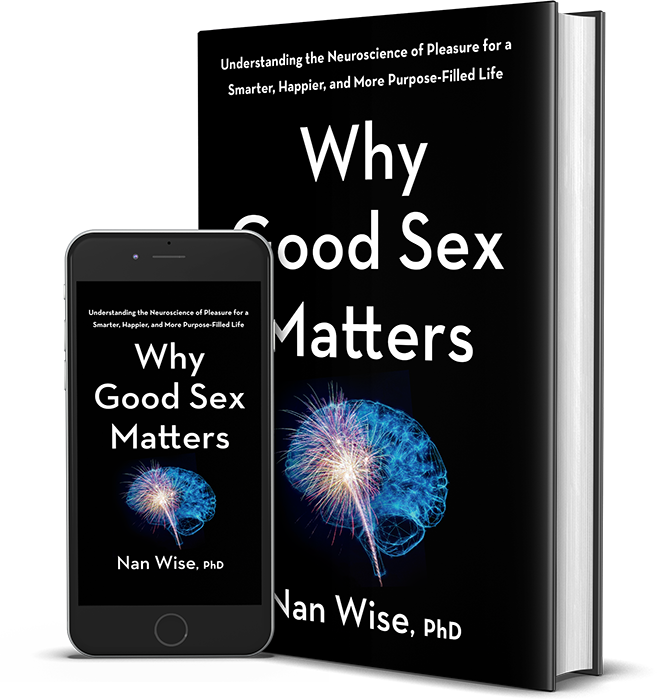
As I have written about in my book, our emotional lives are organized around core wired-in brain systems—fear, rage, grief/panic, seeking, care, play, and lust. Under chronic stress, fear, rage, and grief/panic dominate. Anxiety reflects anticipation of threat; anhedonia emerges when SEEKING is dampened.
Ventilation helps by allowing emotions to be named, felt, and witnessed rather than suppressed. When someone listens without fixing or minimizing, the nervous system settles. Fear softens. Grief eases. Pleasure and motivation can re-emerge.
This kind of attuned listening is a powerful form of co-regulation. A great way to cultivate a safe space for ventilating feelings is to learn active listening tools. Here’s a link to learn more about how to practice this form of ventilating feelings.
Know Your Defensive Style
Under stress, we default to familiar survival strategies:
- Fight: blame or attack
- Flight: overwork or distraction
- Freeze: numbness or paralysis
- Fawn: people-pleasing
These are learned adaptations or habits that don’t always serve. Without awareness, they keep the nervous system locked in a state of threat, preventing us from connecting with others. If you know your own defensive style, you can learn how to manage it.
Pressing Pause
Learning to recognize activation and press pause is essential. Tight chest, shallow breath, agitation, or muscular tension are cues to stop and regulate—not push through.
You can name this in relationship: “I need a few minutes so I don’t say something I don’t mean.” Regulation is a prerequisite for communication. And communication promotes connection. And connection can soothe our nervous systems like nothing else.
Pleasure as Resistance and Repair
If suffering narrows our world, pleasure expands it.
As I suffer from anhedonia when stressed, I need to make pleasure-seeking a daily practice. Often, what helps me open to pleasure is to first ventilate my pain and worries. I ask my husband to give me an active listening session. I pour out my pain, listen to my deepest fears, regrets, hopes, and dreams. Often, I have a good cry. I grieve, I mourn, and then I move more into the moment. And being in the moment is a major tool for stress reduction.
For those with trauma histories or harsh inner critics, pleasure often requires intention and permission.
Pleasure is not frivolous. It is how the brain relearns safety and hope.
Re-orienting to the moment
Re-orienting to the moment does not erase suffering, but it stabilizes the nervous system. Sometimes it’s as simple as:
- “In this moment, I am safe.”
- “Right now, we are okay.”
- “We will get through this together.”
Not forever. Just now.
Making Peace Without Losing Heart
Life is challenging. Loss is inevitable. Both my parents have died in the past few years. My dog is sick and not going to get better. The world is a hot mess. Many of us are carrying more than we expected.
Radical acceptance asks us to stop arguing with reality long enough to care for ourselves inside it—to ventilate, regulate, connect, and seek pleasure not as denial, but as devotion to being alive.
To the extent that things are okay, let them be okay.
And where they are not, let us meet ourselves with compassion.
That, too, is resistance.
And it is how we (I) heal.