If you’ve been following this blog, you know I’ve been struggling with anxiety and depression—and working hard to reclaim my capacity for pleasure. I’ve written candidly about that journey: sharing a model of how the three-level brain/mind works so we can learn to work it better, and offering practical tools to help reverse the anhedonia that’s at the heart of this suffering.
Difficulty experiencing pleasure isn’t just a personal problem: It’s a driving force behind soaring rates of anxiety and depression, and behind what researchers are calling the sexual recession—the well-documented trend of people having significantly less sex than previous generations.
Good news about a revolutionary new treatment for reclaiming our capacity for pleasure
I have recently learned about a newly developed therapy for anxiety, depression, and trauma, which specifically addresses how to reboot our pleasure systems, positive affect treatment. In this post, I will introduce this evidence-based approach, shown to be more effective than traditional therapies, and share how you can begin using its core practices. Note: This is not a replacement for professional help, but a validated toolkit for rebuilding your capacity for joy.
The problem isn’t just stress—it’s a pleasure shutdown
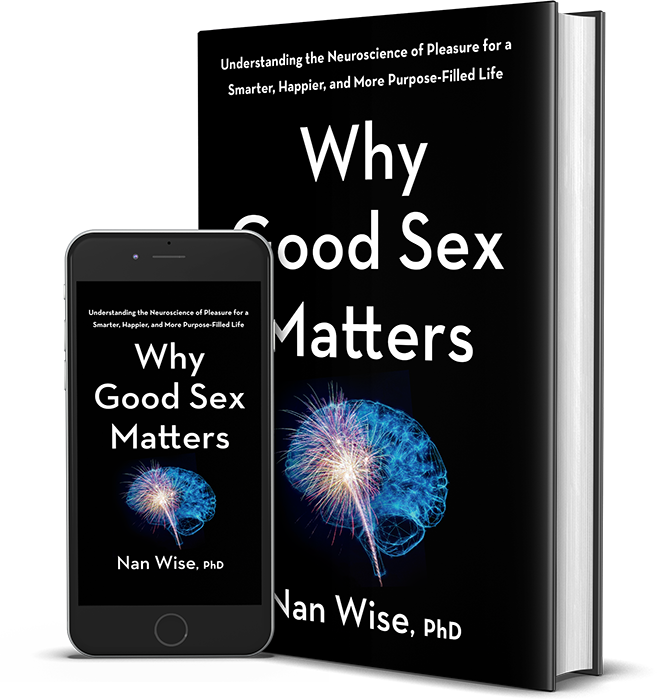
My book, Why Good Sex Matters, grew out of years of witnessing scores of clients lose the capacity for satisfying pleasures—in and out of the bedroom. This “pleasure crisis” is driven by the relentless demands of the attention economy—the pings, the scroll, the low-grade overstimulation that never really stops—and is quietly eroding our capacity for embodied, felt pleasure.
Layered on top of this is the traumademic: the collision of our personal trauma histories with the collective stress, loss, and uncertainty of living in an era of relentless upheaval. When individual nervous systems—already impacted by early wounds—encounter chronic activation in a world that feels genuinely threatening, the result is compounded dysregulation. Nervous systems locked in fight, flight, or freeze lead to brains with diminished pleasure capacity.
And this is exactly what positive affect treatment (PAT) was designed to address.
PAT, developed by Michelle Craske and colleagues at UCLA, is built on a key insight: low positive affect (emotion)—the absence of joy, enthusiasm, and engagement—is a distinct clinical problem, not just a symptom that disappears when anxiety or depression lifts. You must actively rebuild it. The good news? You can.
Meet your SEEKING system
To understand why PAT works, you need to meet one of your brain’s most important core emotional systems: SEEKING. Identified by affective neuroscientist Jaak Panksepp, the SEEKING system is your brain’s primary engine for motivation, curiosity, and anticipatory pleasure. It’s what makes you lean forward into life.
When we’re stuck in survival mode—when the three-story brain-mind is locked in the basement, flooded with stress hormones—SEEKING goes quiet. We stop wanting. We stop anticipating. We lose our motivation to explore. We lose our lust for life. This is the neurological core of anhedonia, and its epidemic right now.
PAT works directly on this system. Its practices are, in essence, a set of evidence-based tools for waking SEEKING back up.
The practices—and how to actually do them
Here’s what PAT looks like in daily life. These aren’t abstract concepts. They’re concrete moves you can make, starting today.
Savor something—on purpose. Savoring is the practice of deliberately slowing down to fully absorb a positive experience. Not just noticing it but lingering. The warmth of your coffee cup. The specific quality of morning light. A moment of genuine connection. Research shows that savoring amplifies positive emotion and consolidates access to these brain states. Try this: Once a day, identify one moment worth savoring and give it at least 30 seconds of your full, embodied attention.
Activate toward pleasure, not just productivity. Schedule activities specifically chosen because they generate enjoyment and meaning for you. Not what you think you should enjoy. What actually lights you up, even a little. This is healthy hedonism in practice: treating your own pleasure as data, as legitimate, as worth protecting.
Use positive imagery to prime SEEKING. Your brain’s anticipatory circuitry doesn’t distinguish well between vividly imagined futures and real ones. When you spend a few minutes imagining something you’re looking forward to—in sensory detail—you activate SEEKING. You feel the motivational pull. Try a brief daily practice: close your eyes, breathe, and imagine one positive experience coming up in your life. Let yourself feel the anticipation.
Practice gratitude as a directed attention skill. The evidence supporting gratitude’s healing powers is solid. The PAT version of paying attention to gratitude isn’t just making a list of blessings—it’s a practice of genuinely noticing what is working, what you appreciate, and what you can view as positive in your day. It’s training your attention to scan for good, which your stress-wired brain has likely stopped doing automatically.
Bring self-compassion into the mix. This might seem surprising, but low positive affect is often actively maintained by harsh self-criticism. When we beat ourselves up, we are diminished—emotionally, physically, and relationally. Self-compassion practices—treating yourself with the warmth you’d offer a struggling friend—directly creates space for positive emotion. PAT treats self-compassion as a core skill for rebuilding positive affect.
Connect—and really feel it. Social warmth is one of the most powerful activators of positive affect. PAT includes deliberate practices around connection: reaching out, expressing appreciation, and allowing yourself to receive care. Oxytocin, the social bonding neurochemical, directly modulates your brain’s reward circuitry. This is critical to our well-being.
A note on starting small
Here’s something I tell my clients and remind myself: you don’t need to feel motivated to begin. In fact, waiting to feel motivated is a trap—motivation follows action, not the other way around. The SEEKING system wakes up when you give it something to seek.
Pick one practice from this list. Just one. Do it today, imperfectly, for five minutes. Notice whatever you notice. That noticing—that tiny flicker of attention toward positive experience—is the beginning of rewiring.
A special offer for this interested in more pleasure and joy in life
For a limited time, when you purchase Why Good Sex Matters, I’m including two complimentary gifts:
✦ A free one-on-one coaching session with me
✦ A personalized Core Emotion Analysis based on your unique emotional profile
Together, these give you a real roadmap — not just the science in the book, but a direct look at what’s happening in your own nervous system and emotional landscape, and where your greatest opportunities for healing and pleasure actually live.
Here’s how to claim your gifts:
- Purchase Why Good Sex Matters
- Forward your receipt to me at nan@askdoctornan.com
- I’ll be in touch within 48 hours to schedule your session and send your analysis
This offer is available for a limited time, and I’m keeping the number of sessions small so I can give each person real attention.